

Jebel Shams, the “Mountain of the Sun”, is the highest mountain in Oman, rising about 3,009 metres above sea level in the Al Hajar range. Its name comes from being one of the first places in the country to catch the morning light. I have photographed this mountain for many years, at sunrise, in winter cloud and under the Milky Way, and it still surprises me every time I return.
This guide covers where Jebel Shams is, the viewpoints I recommend for photography, the best time to visit and how to get there.
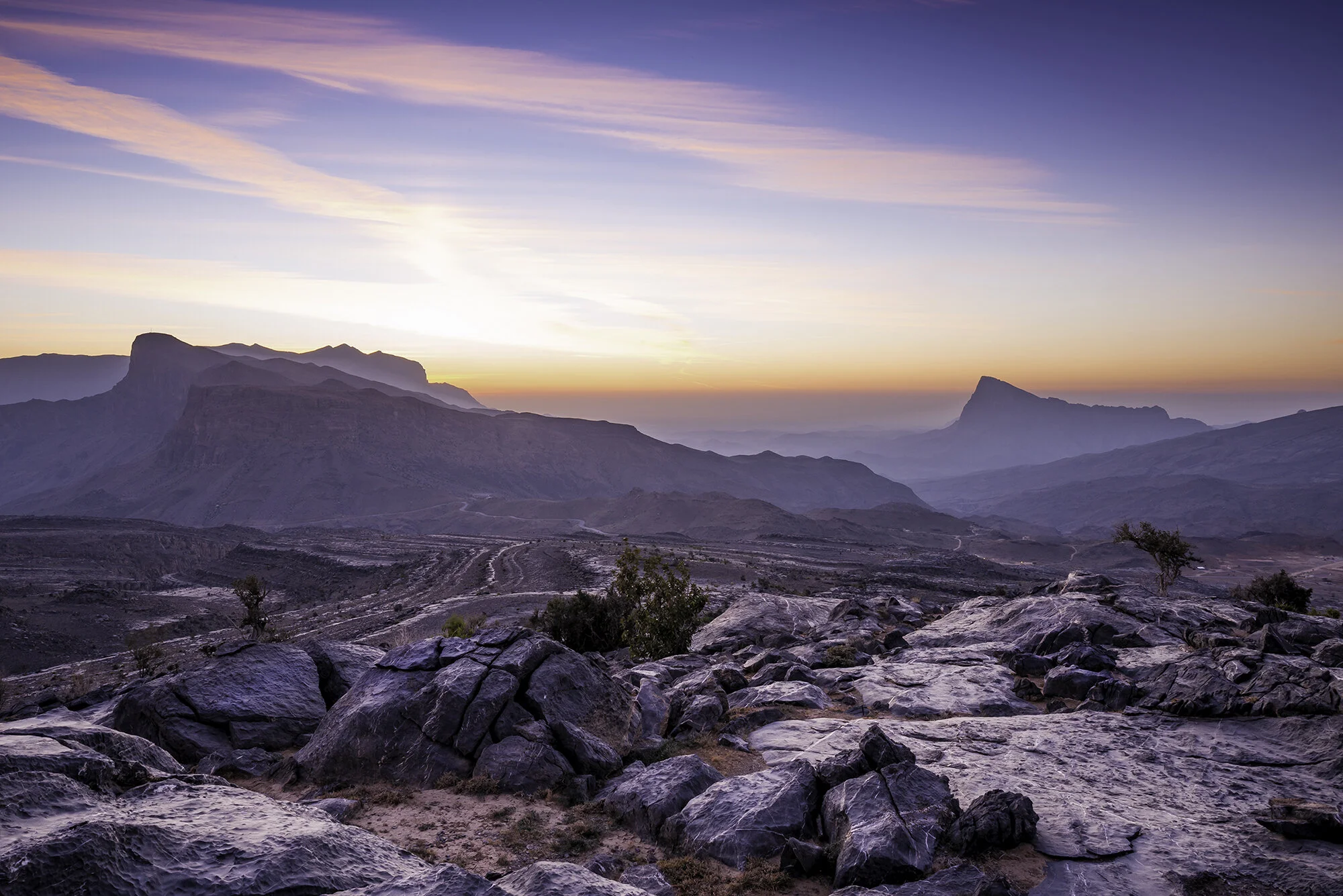
Jabel Shams at Sunset
Where is Jebel Shams?
Jebel Shams is in the Ad Dakhiliyah region, near the town of Al Hamra and about 235 km from Muscat. The mountain overlooks Wadi An Nakhur, a gorge so deep that it is often called the “Grand Canyon of Arabia”. From the rim, the canyon walls drop for hundreds of metres, and the old villages and terraces below look like toys.
Best viewpoints for photography
The canyon rim at Al Khitaym
This is the easiest place to start. You can stand at the edge of the canyon and watch the light move across the walls at sunrise and sunset. A wide or standard zoom (24–70mm) covers most scenes here, and a telephoto lens (70–200mm) is useful for picking out the layered ridges in the distance.
The Balcony Walk (W6)
This is a moderate trail of about 2.5 to 3 hours that starts at Al Khitaym. It follows an old donkey path along a ledge on the canyon wall, past cairns, old ruins and goats, to the abandoned cliff-side village of As Sab. Start early, while the light is soft and the air is cool. Carry plenty of water, because there is no shade for most of the walk.
The W4 trek to the southern summit
This is a strenuous route of up to 10 hours. It is only for fit, experienced hikers, but it rewards you with a 360-degree view across the Hajar Mountains.
The night sky
Jebel Shams has very little light pollution. On a clear, moonless night it is one of the best places in Oman to photograph the Milky Way. This is the one time I always use a tripod.
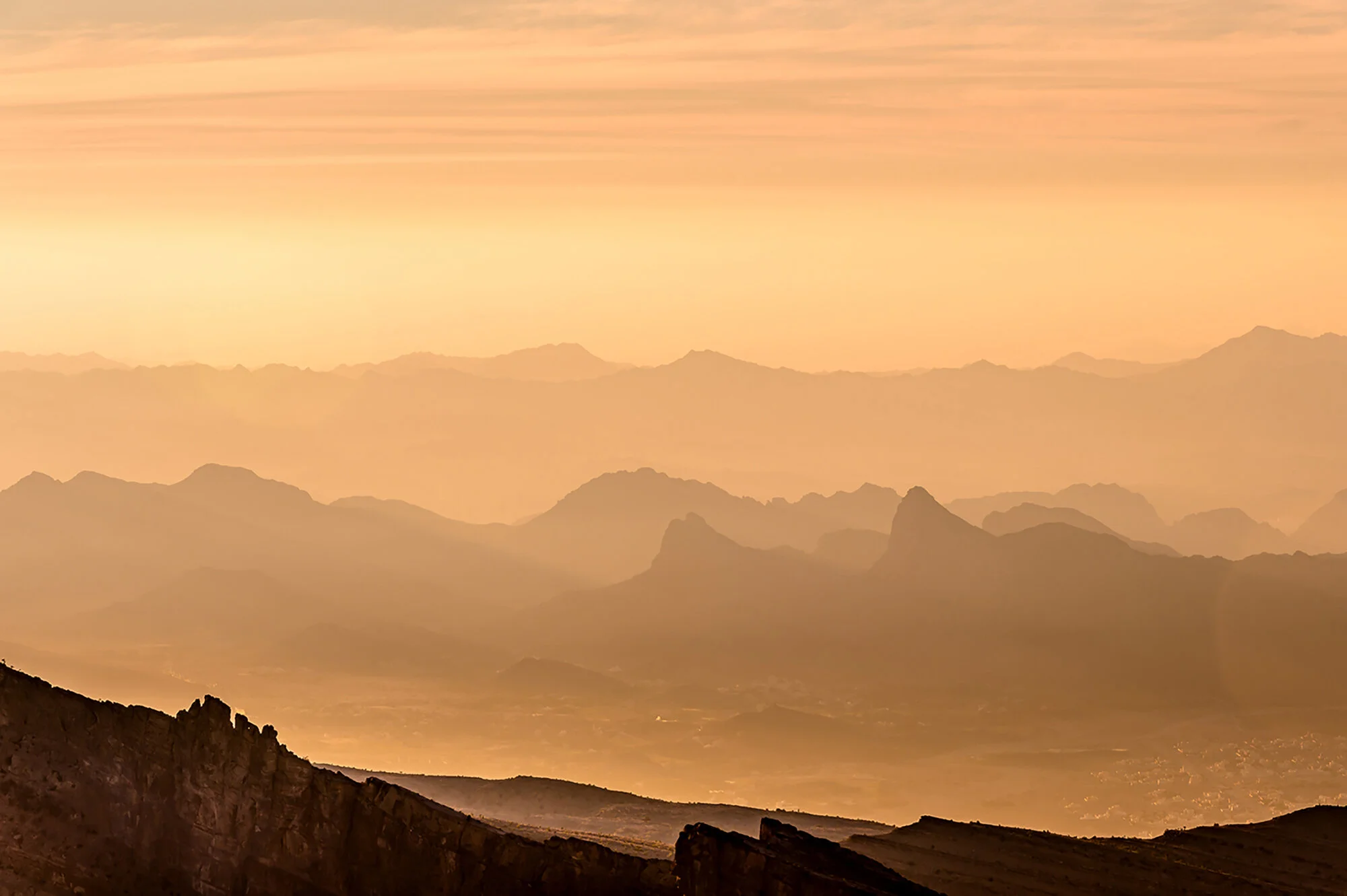
Sunrise from Jabel Shams
Weather and the best time to visit
Jebel Shams is much cooler than the towns below it. In winter, nights on the plateau can be cold, and it occasionally snows. Bring warm layers even if the day in Muscat is hot.
October to April: comfortable temperatures for hiking and clear air for photography.
May to September: the heat stays lower than on the coast, which makes the mountain a good escape from the summer heat. Expect more haze in the middle of the day.
For photography, the first and last hours of light are always the best, whatever the season.
How to get there
From Muscat, drive towards Nizwa, then on to Al Hamra, where the mountain road begins. The road is paved for most of the way, but the final stretch is steep and rough, so a 4x4 vehicle is strongly recommended. Allow about three hours from Muscat. There are a few small hotels and campsites on the plateau if you want to stay for sunrise or a night shoot.


Photograph Jebel Shams with a local photographer
If you want to photograph Jebel Shams without planning the logistics yourself, I run private photography tours for photographers. We get you to the right viewpoint before the light, in an insured 4x4, and give you time to work each scene your way.
Want to bring this view home? See my fine art print Sunrise from Jebel Shams.
